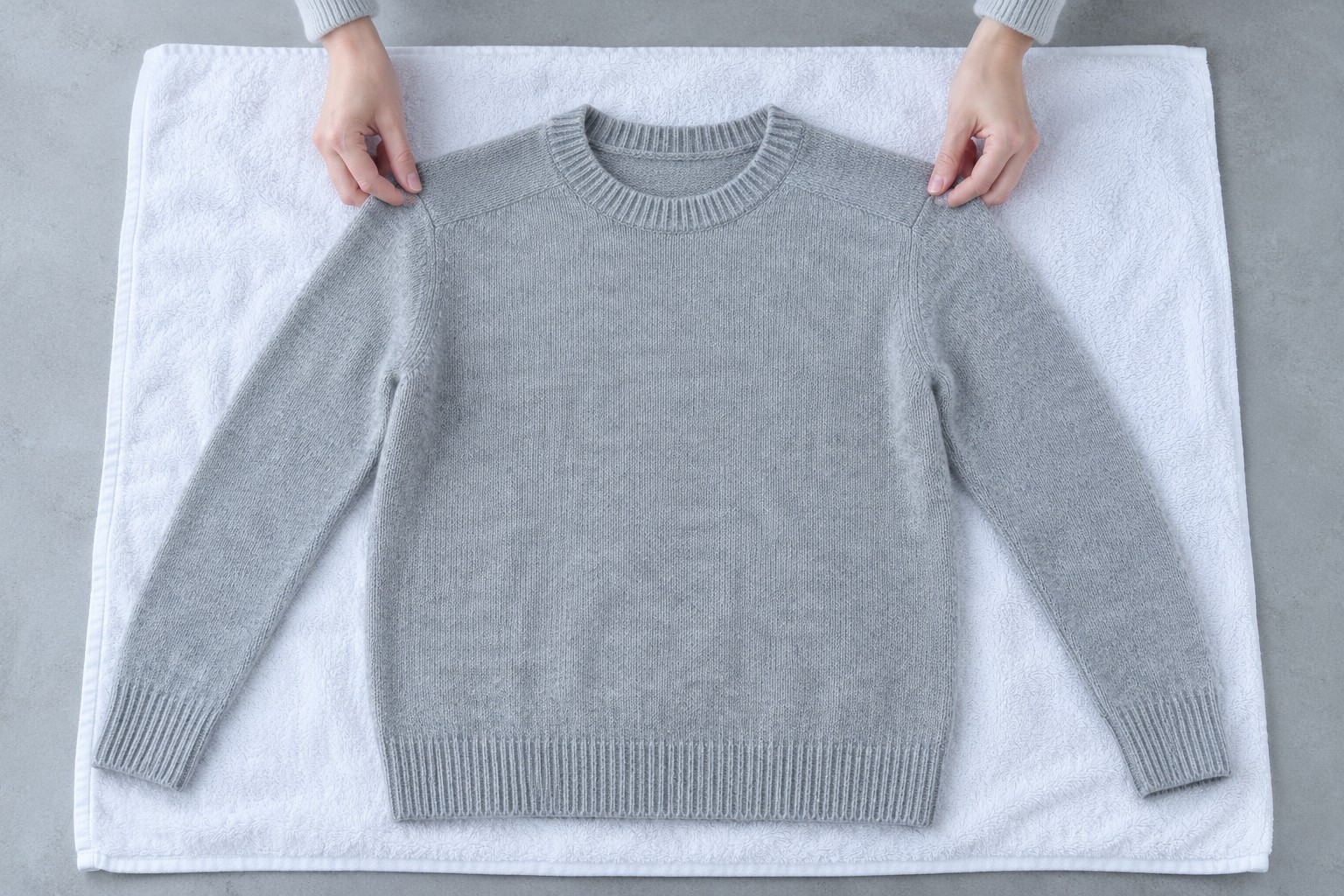
If your sweater’s label permits flat drying, support the wet knit on a clean towel or a flat mesh rack and ease it back into shape. Keep it away from direct heat. A wet sweater is heavier than a dry one, and a hanger supports that weight at only two small points.
Read the drying line on the tag
Start with the garment’s actual instructions. A sweater marked flat dry goes on a flat surface. Some wool garments allow tumble drying under specific settings. Use a dryer for wool only when the garment label permits it and the appliance can meet the specified setting. Check a dry-clean-only garment with a professional before attempting home washing.
Lift and blot the knit
Gather the sleeves and body together before lifting the sweater out of a sink or machine. Support its weight with both hands. Spread it on a clean light-colored towel. If there is excess water, roll the towel around the sweater loosely and press. Take the sweater out as soon as the towel has absorbed the extra moisture. Avoid twisting the fabric.
Reshape on a fresh towel
Lay the sweater fully flat so no part hangs off the edge. Start with the shoulder seams, then ease the body and sleeves toward their usual proportions. Put the hem and cuffs where they naturally sit. A similar dry sweater or a photo can help you judge the shape. Use small adjustments and stop when you feel resistance.
Check the thickest spots before folding
Leave space around the sweater for airflow. A clean flat mesh rack can increase airflow if it supports the whole garment. If your towel becomes saturated, replace it with a dry one. When checking for dryness, feel the cuffs, underarm seams, and the folded neckline. Let those areas finish drying before putting the sweater away.
Common setup mistakes
- A hanger supports the sweater unevenly and can leave shoulder bumps.
- A chair back leaves part of the sweater suspended and can leave a crease.
- A radiator or other direct heat source can dry the garment unevenly.
- Folding the sweater while the cuffs are damp traps moisture inside the folds.
Before you lift the sweater, clear a drying space
Set up the landing spot while the sweater is still in the sink or machine. A damp crewneck is easy to drop when you have to open a door or move things off a counter with one hand. Choose a surface large enough for the body and both sleeves. If you are using a table, protect its finish from moisture. Put the towel or rack in place and have a second clean towel nearby. Check that the surface is level, stable, and clear of anything that could catch a loose stitch.
A small drying space can work if you can arrange the sleeves beside the body with a gentle bend at the elbow. Leave a gap between each sleeve and the side seam. Where two damp layers touch, they will take longer to dry. Avoid forcing an oversized sweater onto a narrow rack. Use a larger rack or lay it on a clean towel on a suitable surface until it can be moved without stretching.
Think through the route from washer to towel. If the laundry room is down a hall, use a clean basin to carry the sweater. Gather the knit with both hands, lower it into the basin, and bring it to the drying area. This is especially helpful for heavy cable knits and long cardigans. When damp, a long front panel can trail well below your hands even if you are supporting the shoulder area.
Decide how much water to remove
After a label-approved machine wash, the sweater may already feel damp and light enough to spread out. You can go straight to the drying towel in that case. If it is dripping, remove the excess with a clean absorbent towel. Put the sweater flat on the towel, roll it loosely, and press with your palms. Unroll it and inspect the knit. If the first towel is soaked and the sweater still drips, use a second dry towel. Stop once the sweater is manageable. Trying to squeeze out every drop adds handling without making it ready to wear.
If you hand-washed the sweater in a sink, drain the water and let it run away before lifting the garment. Bring the sleeves inward so they are supported along with the body. If a heavy knit feels difficult to manage even after draining, slide a clean towel or basin under it. Twisting the sleeves or pulling the sweater by the collar concentrates force in a small area of wet fabric. The goal is to spread the weight across the garment as you move it.
Choose a towel that is clean, absorbent, and free of lint. A pale or white towel is handy when you are concerned about stray dye from the towel itself. If the sweater is new and releases dye, keep the damp knit away from other garments and surfaces that might stain. If the sweater’s care instructions mention special handling for the color, follow those directions and ask the maker for guidance if the wording is unclear.
Reshape from the shoulders down
Spread the sweater right side up or arrange it so you can see its seams. Center the neckline first. Then place the shoulder seams at an even distance from the neck. Smooth the body with open palms, working toward the hem. Lift and reposition the fabric if it bunches. Check that the side seams and hem sit where they normally would. A crooked hem on the towel can come from the body being laid unevenly, especially after one side of the sweater absorbed more water.
Use the details of your garment as landmarks. A ribbed hem is often narrower than the body above it. Let the ribbing rest naturally. A dropped shoulder is meant to extend beyond the shoulder line, so arrange it according to the sweater’s original cut. On a cardigan, bring the front edges into alignment and support any heavy buttons so they do not pull on the damp front band. If the maker specifies how to close or lay out the garment, use that instruction.
Lay out the sleeves with a little space around them, then check that the cuffs are even. For a relaxed sweater, the two sleeves can bend slightly if the rack is short. Avoid sharp folds. A folded cuff, doubled sleeve, or overlapping front edge can stay damp after the body of the sweater feels dry. When one side appears longer, lift it gently and arrange it again before drawing conclusions about the size.
Use a photo of the garment when dry, or measurements you took before washing, if the desired shape is hard to judge. Compare the chest width, sleeve length, and body length without pulling the sweater into position. Use the reference to spot a section that is folded under or lying at an angle. If the sweater has already changed shape considerably or feels felted, avoid stretching it to match the measurements. Send the maker or a knitwear specialist a photo and describe how it was washed.
Choose a towel or mesh rack for your space
A towel gives continuous support and is convenient in a small home. Its main drawback is that wet fabric underneath the sweater holds moisture next to the knit. Check the towel as drying progresses. If it feels wet beneath the body or cuffs, move the sweater with support and use a fresh towel. A wide flat mesh rack gives air more access below the sweater. Check that the mesh is clean and taut, and that the shoulders, hem and sleeves all fit within the supported area.
Pick a spot with normal airflow and out of direct sun. Leave a little space around the setup so air can pass along the edge of the towel or beneath the rack. Keep the sweater away from radiators and other direct heat. An indoor clothesline can be useful for the towels you have used, while the sweater remains on its flat support. In a shared laundry area, a clean rack that can stay securely in one place is easier to manage than a narrow surface you have to clear in a hurry.
Make time for the garment to dry before you need it. Thickness, room conditions, how wet the sweater was after washing, and how much fabric touches the towel all affect the drying time. A heavy cable knit may feel dry at the shoulders while the sides and cuffs still feel damp. If you need to wear the sweater soon, move the drying setup to a room with better airflow and replace a wet towel. Follow the label before considering a dryer.
Can I turn it over while it dries?
If the top is drying but the underside is still damp, first check the towel. Replacing it may be enough. If you turn a heavy sweater, support the body and sleeves throughout the move. One option is to place a clean towel on top, hold the layers together, and turn them as a unit on the flat surface. Lift away the damp towel and arrange the sweater again. If it is very wet or the knit is open and easy to snag, wait until the garment is lighter or use a suitable flat mesh rack from the start.
What if the sweater is wool blended with another fiber?
Use the label for the finished garment. A wool-and-nylon cardigan may have different drying directions from a pure wool pullover. Elastic in cuffs, a contrasting trim, or a zipper can affect how a garment should be handled. Do the same for a sweater labeled cashmere or a knit with several listed fibers. The front of a tag may identify the main fiber, while another line gives the care limit for the complete piece. If the tag uses symbols, start with the laundry symbols guide.
If the sweater has fuzzy or brushed sections, be gentle with those areas while it is damp. Smooth the shape with your palms and avoid scrubbing or dragging the surface across the towel. Keep the sweater away from rough edges and any garment with exposed hooks or zippers. A smooth towel and room to maneuver help if you are drying several knits on the same day.
When the label permits a dryer
Read the full drying instruction and check the dryer manual for a matching setting. A machine’s wool or delicate setting varies by model. Follow any restrictions on heat and method printed on the label. If you cannot tell whether the dryer can meet those restrictions, look up the garment maker’s instructions or ask them. If the label allows flat drying, that gives you a way to finish the load without guessing at the machine setting. A crossed-out tumble symbol means keep the sweater out of the dryer.
How to tell if it is ready to put away
Feel the inside of the cuffs, waistband, underarms, and any doubled area at the collar. Check the side that rested on the towel as well as the surface facing upward. A spot that feels cool and damp needs more time. Return the sweater to flat support and leave the thicker sections exposed to air. A garment that is ready to store should feel dry throughout, including the seams.
Once dry, fold the sweater loosely and place it on a clean shelf. Choose a fold that supports the sleeves without stretching the cuffs. If this is the last wash before the season changes, check the storage area itself for dampness and inspect other garments before stacking them together. Read the seasonal clothes storage guide for ideas on folding, hanging, and checking a stored wardrobe.
Three situations you may run into
A thin sweater is dry except at the neck
Open out the collar so the damp layers can breathe, leaving the body supported. Check the shoulder seams at the same time. Fold and store it only after the collar dries. This is a common place for moisture to linger because the neckband is thicker than the fabric through the body.
A heavy cardigan comes out of the wash unevenly damp
Blot the wetter section with the towel and spread the cardigan out with its edges aligned. Adjust the front panels and sleeves before the garment dries in a skewed position. Avoid lifting it by the front edge or by a button. Check the lower corners later, since fabric that briefly hung down during the move can hold extra moisture.
The shoulder looks lumpy after hanging
Take the sweater off the hanger and assess it on a flat surface. If it is still damp, gently ease the shoulder seam into place with both hands. If it has dried in that shape, consult the care instructions before wetting it again. For a delicate, valuable, or dry-clean-only sweater, ask a cleaner familiar with knitwear. When the sweater is fully dry and back in shape, fold it before returning it to the closet.
For guidance on the preceding wash, see Woolmark’s sweater washing instructions. For a garment with a specific dryer allowance, see Woolmark’s guidance on tumble drying wool and follow the garment’s own label.
Reference: Woolmark’s wool sweater drying guide.