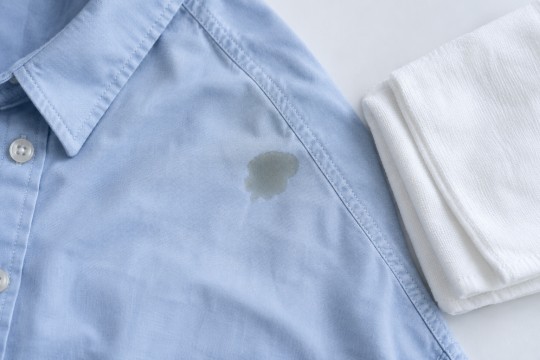
Start with the care tag. A washable cotton shirt may tolerate a compatible laundry pretreatment. A dry-clean-only silk blouse should go to a cleaner. The same oil mark can call for two different plans because the fabric and finish determine which treatment the garment can tolerate.
Pick up excess oil
If there is still a drop of oil or food on the surface, lift the excess and gently blot with a clean, absorbent cloth. Keep the stained layer away from the other layers of the shirt while you work. Avoid vigorous rubbing, which can spread the mark or change the appearance of the fabric.
Choose a pretreatment for washable fabric
Use a laundry pretreatment or liquid laundry detergent only if its directions cover the garment’s fiber and color. Check the label for exclusions and follow the instructions for application, dilution, and contact time. Test on an inconspicuous area when directed, especially on dark or patterned fabric. Stop if the color changes or transfers.
Wash within the garment’s limits
Follow the shirt label for cycle and water temperature. General stain guidance sometimes suggests the hottest water safe for the fabric. The garment label, including any limits for its trim, takes priority. The product directions also need to work with that setting. A grease stain by itself gives no reason to add bleach.
Check before drying
Inspect the area under good light before applying dryer heat. An oil mark can look darker than the surrounding material, but the fabric may be uniformly darker while still wet. Air dry according to the care instructions if you need to see whether the mark remains. Repeat a compatible treatment only within the product instructions. If it has already been dried and stays visible, a cleaner can assess the garment and the finish.
When to stop at home
Take a dry-clean-only or water-sensitive garment to a professional cleaner. Point out the mark and say whether it came from salad dressing, cooking oil, butter, or another food. Tell them what you put on it. That information helps identify the appropriate treatment.
Reference: American Cleaning Institute stain removal guide.