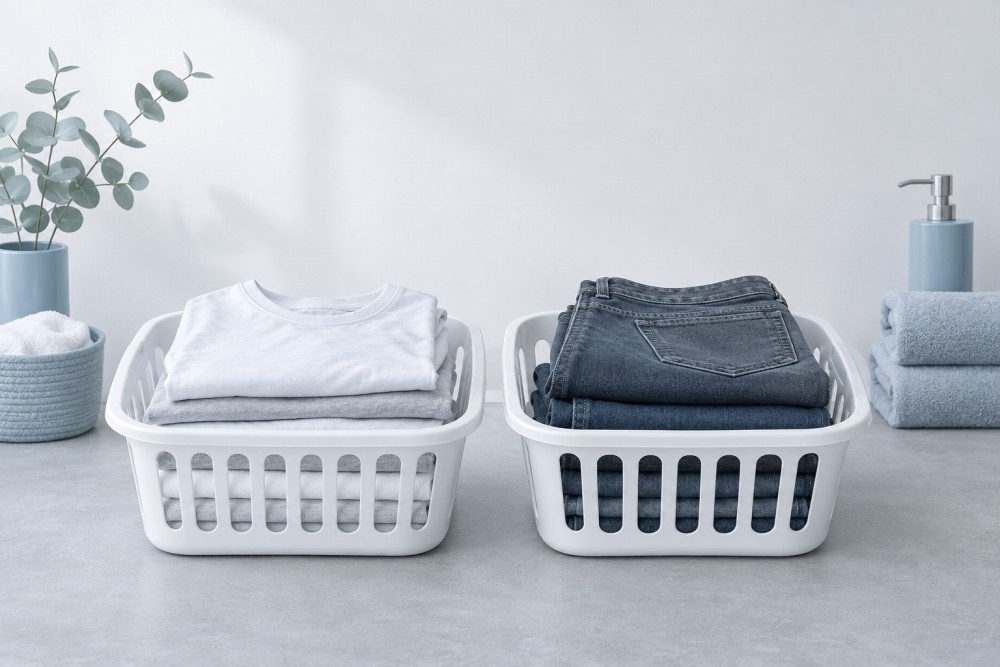
Start by finding the garments that need different care, then sort the remaining machine-washable items by color and weight. Two shirts can be the same color and still belong in different loads. A white cotton tee and a white wool sweater, for example, may have different instructions for washing and drying.
Pull out anything with a special care label
Check for hand-wash, dry-clean-only, or specific machine-cycle instructions before making piles. If a garment is washable, check its temperature and cycle limits. When two items have different limits, use a setting suitable for both or wash them separately. If you are unsure what a mark means, read the laundry symbols guide before choosing a setting.
Separate items that may transfer color
Keep new dark denim and other items that might release dye away from white or pale clothes. Read any instructions to wash separately or with similar colors. For example, if a dark pair of jeans calls for a gentle machine wash and your light shirts call for a different routine, keep the jeans out of that load. Check our denim guide for raw and prewashed jeans.
Check weight, lint, and stains
Wash lint-shedding towels apart from clothes that collect lint. Keep heavy pieces away from delicate items that can snag. Empty pockets, secure closures as the maker recommends, and look for fresh marks on collars and cuffs. A cooking-oil spot may need compatible pretreatment before washing. Use only products suitable for the label, fabric and color.
Make a separate drying decision
Even if two garments share a wash cycle, they may need different drying methods. Move label-approved items to the dryer at the appropriate setting, and take out garments that need to hang or dry flat. A wool sweater that allows flat drying belongs on a supported surface. A garment that prohibits tumble drying stays out of the dryer.
Reference: American Cleaning Institute Laundry Basics.