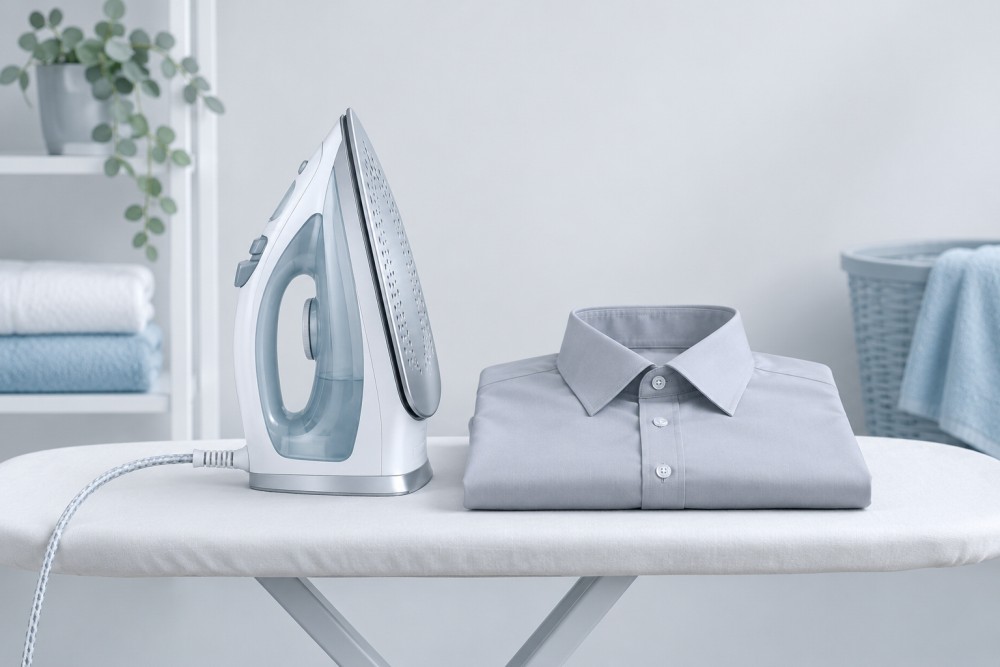
Find the iron mark and read any written instructions before turning on the iron. A crossed-out iron means the garment should not be ironed. If the label permits ironing, match the heat and any steam restrictions to the appliance manual. A synthetic blend, print or lining can change the setting even when the main fabric is cotton or wool.
Check heat and steam separately
Numbers, dots and written instructions depend on the label system. Use the laundry symbols guide to identify the iron mark and read the rest of the label for steam instructions. If steam is prohibited, use dry ironing only if the label allows it. If the label prohibits ironing or does not resolve whether a steamer is suitable, check the manufacturer’s care guidance before trying steam as a substitute.
Work on one area at a time
Lay the garment on a stable ironing board and smooth the fabric with your hand. Check for trims, prints and fasteners that should be avoided. If the manufacturer recommends working on the reverse side or using a clean pressing cloth, get that set up first. Begin with an inconspicuous section using the permitted setting. Stop if you see shine, a change in texture, or a mark on the pressing cloth.
Adjust for the garment’s construction
On a washable shirt, you can arrange each panel flat and work around buttons and seams. Follow the care label if it specifies ironing inside out. For wool, Woolmark advises ironing only where the garment’s care instructions allow it. A thick sweater may need only to be reshaped and dried flat. On a tailored jacket or delicate garment, ask the maker or a cleaner about pressing if the heat or steam limits are unclear.
Let the piece settle before putting it away
Put the iron upright on its rest when you pause, and follow the appliance instructions when switching it off. Let the garment cool and dry before storing. Fold or hang it according to its construction so you do not press a new crease into still-warm fabric.
Reference: Woolmark’s wool ironing guide and the garment and appliance instructions.